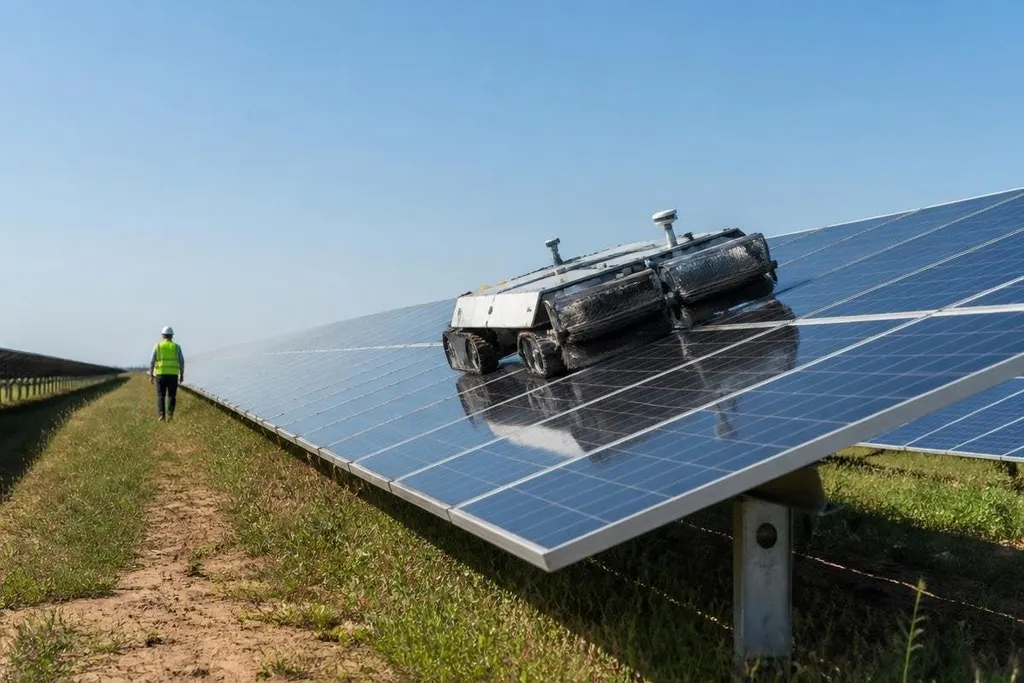
Solar panels work outdoors, where dust, mud, plant growth, heat, and rain can affect their surface. On a large solar site, checking and cleaning thousands of panels by hand takes people, vehicles, water, and time.
Solar farm robots matter because they can move this repeated work closer to the panels themselves. The benefit depends on the site, the robot’s cleaning method, and proof that the system protects the panels while lowering daily work.
- Robots can inspect panel rows without sending a worker to every section.
- Dry cleaning can reduce the need for water in areas with limited supply.
- Better results depend on safe movement, reliable fault alerts, and easy service.
Cleaning panels without moving a full crew
Dust on a photovoltaic panel can block part of the light reaching its solar cells. The effect varies with the dust, weather, panel angle, and local site conditions, so a robot should measure the result at each location rather than promise one fixed gain.
A cleaning robot may use brushes, rollers, air, or another contact method. Dry systems can help on sites where water delivery is costly or restricted, while wet cleaning can add tanks, pumps, drying time, and water treatment to the work.
The robot also needs to avoid damaging the panel surface. Excess pressure, trapped grit, or a worn brush can create scratches. A useful system records cleaning runs and faults, so the operator can check which rows were serviced and which need a person.
Inspection is as important as cleaning
A solar farm contains long rows of similar panels, which makes small faults easy to miss during a quick drive past. A robot carrying a camera, thermal sensor, or electrical sensor can inspect the same route on a set schedule.
Thermal imaging can show warmer areas linked to possible panel or connection faults. A camera can record broken glass, plant growth, standing water, or objects on the panel. These tools do not fix the fault by themselves. They help the maintenance team decide where to send a technician first.
That record also gives the operator a way to compare images from different visits. A change in one panel row may need a closer check, while a repeated clear image can keep that section off the urgent work list.
A panel row can look clean in an image while a robot still has to cross loose gravel, cable gaps, and uneven ground to reach it. Robot24 reports can put the robot, site, inspection task, and recorded result beside a claim, giving a solar operator facts to weigh before the focus shifts to movement between rows.
Movement is the hard part
Solar sites are built for power generation, not for robot traffic. Rows may have narrow gaps, uneven ground, cables, drainage channels, fences, and service roads. A robot must keep its wheels or tracks away from panel edges and stop when its route changes.
Navigation sensors can help the robot locate its position and follow a planned row. Cameras and other sensors can detect obstacles, but the operator still needs clear rules for remote stops, manual recovery, and work near people.
Weather adds another limit. Rain can change traction, wind can move loose objects, and high heat can affect batteries and electronics. A farm operator needs operating limits and service steps before putting a robot into regular work.
What to check before buying
The robot’s price is only one part of the decision.
Compare the full work cycle: arrival at the site, cleaning, charging, fault handling, and removal from the field.
Use this checklist:
- Panel fit: Check the panel height, tilt, row gap, frame shape, and surface finish.
- Cleaning method: Confirm what the robot removes and whether it needs water, brushes, or a special route.
- Inspection record: Ask what images or sensor data the system saves and how staff can review it.
- Recovery plan: Find out who moves the robot after a stuck wheel, low battery, sensor fault, or blocked row.
- Site limits: Set rules for rain, wind, heat, slopes, loose ground, and nearby workers.
- Payback test: Compare robot costs with the labor, vehicles, water, and missed maintenance work it replaces.
The strongest buying case will come from a site trial that records cleaning results, inspection faults, downtime, and service hours. A short demonstration on clear panels says little about dust, broken ground, blocked routes, or a robot that needs help twice a day.
I think solar farm robots matter most when they remove repeated walking and inspection work from a clear maintenance plan. The open question is whether each system can keep working through a full season with less human effort than the method it replaces.